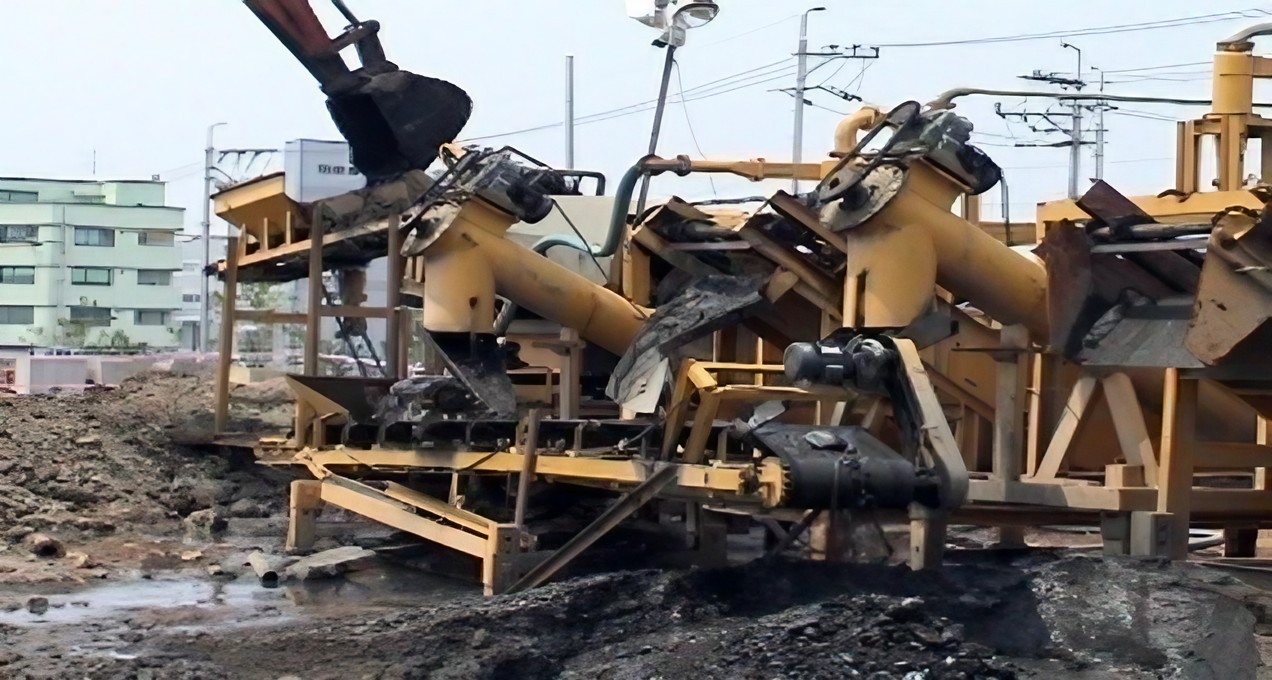
Soil Washing
Separates gravel, sand, clay and sludge to improve recovery and treatment efficiency.
Cleaning and recovering contaminated dredged soil through
Particle Separation & Soil Washing
Particle Separation and Soil Washing separate contaminated dredged soil into gravel, coarse sand, fine sand, clay and sludge, then wash the fractions to recover useful aggregate.
Rather than disposing of dredged soil as waste, washed aggregate is reused for riverbed reapplication and site aggregate, while separated sludge is routed to dewatering, soil improvement and stabilization, reducing waste and creating restoration materials.
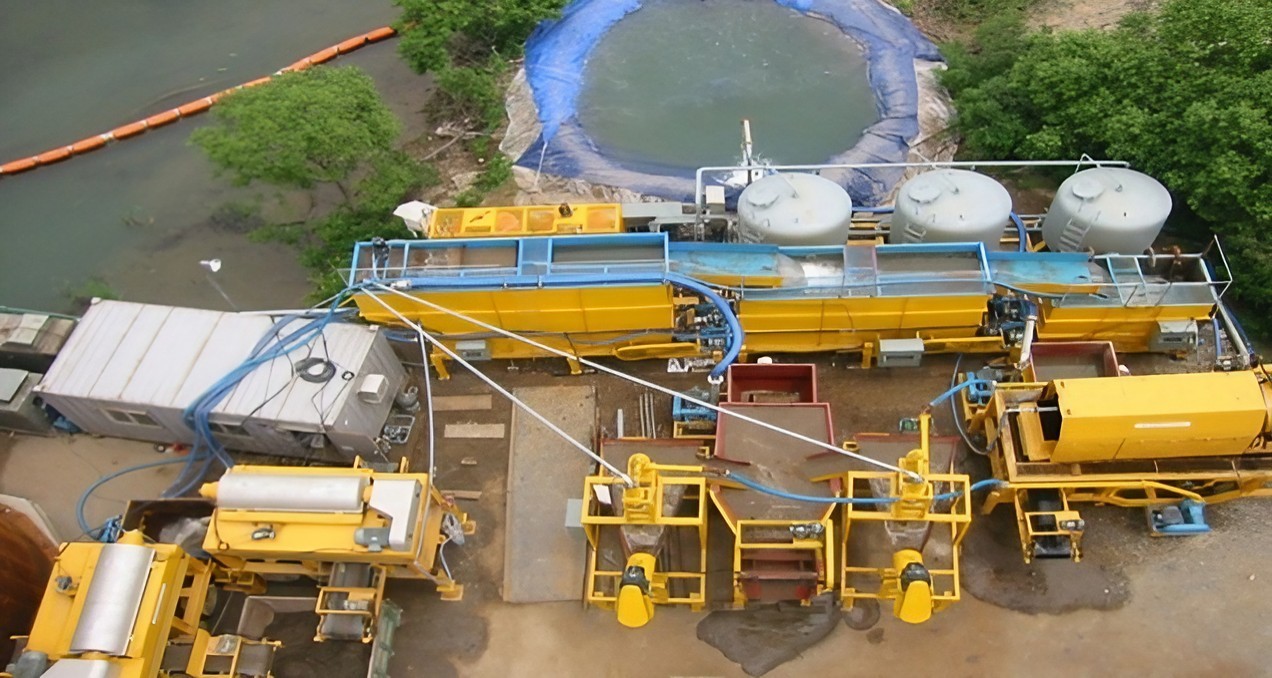
Core Principles of Soil Washing
Aggregate and sludge are separated based on particle size, density, moisture and contamination characteristics. Wash water is treated for reuse or discharged within applicable limits.
Gravel, coarse sand, fine sand, clay and sludge are separated in stages by particle size and density.
Sludge and contaminants adhering to aggregate surfaces are washed away to achieve reusable quality.
Process wash water is settled and treated for reuse or controlled to meet discharge standards.
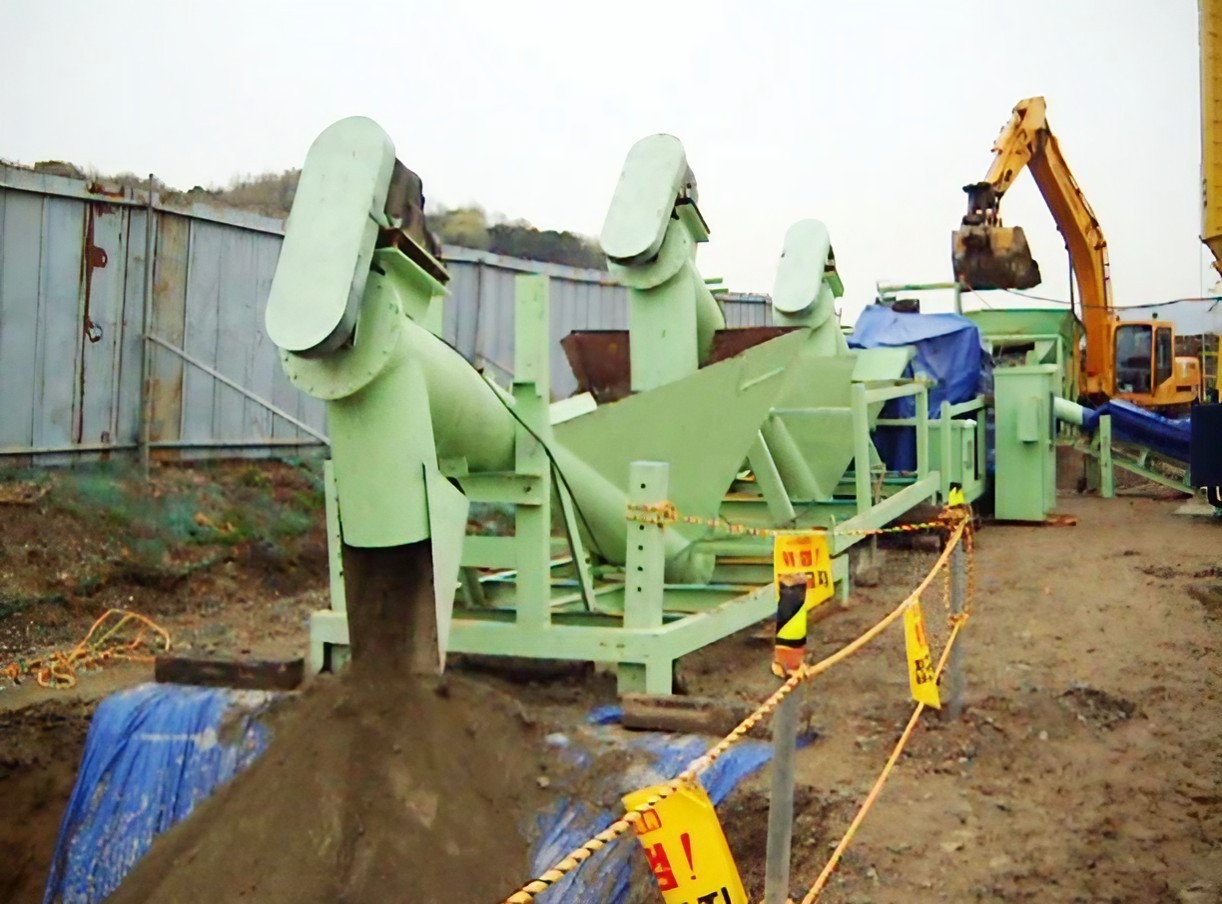
Consistent Quality Through Mechanized Plants
Depending on incoming material, the separation plant integrates feeding, screening, washing, cyclone separation, settling, dewatering and water treatment into a continuous line. Mechanization improves consistency and enables economical operation on constrained sites.
- Continuous ProcessingAn integrated line from feed to separation and water treatment shortens project duration.
- Reduce Contaminated VolumeHighly contaminated fines are separated from reusable aggregate to reduce treatment volume.
- Increase ReuseWashed aggregate can be reused for riverbed reapplication, site aggregate and restoration materials.
- Reduce Secondary PollutionWash-water and dredging-water treatment plus dewatering help prevent on-site contaminant spread.
Post-Treatment Reuse
The goal of Soil Washing is not simply separation; it converts contaminated dredged soil into usable resources and links treatment directly to ecosystem restoration.
Used for riverbed reapplication, Capping and site aggregate to create aquatic habitat foundations.
After quality testing, it can be reused for river and lake restoration, beach placement and other aggregate applications.
Routed to soil improvement and heavy-metal stabilization for conversion into fill or cover material.
After settling and treatment, water is reused for washing or managed within limits to prevent contaminant spread.
Treatment That Leads to Restoration
The value of sediment treatment goes beyond reducing disposal costs. Recovering useful aggregate from contaminated dredged soil and reusing it as aquatic-restoration material can remove pollution sources while supporting ecosystem recovery.