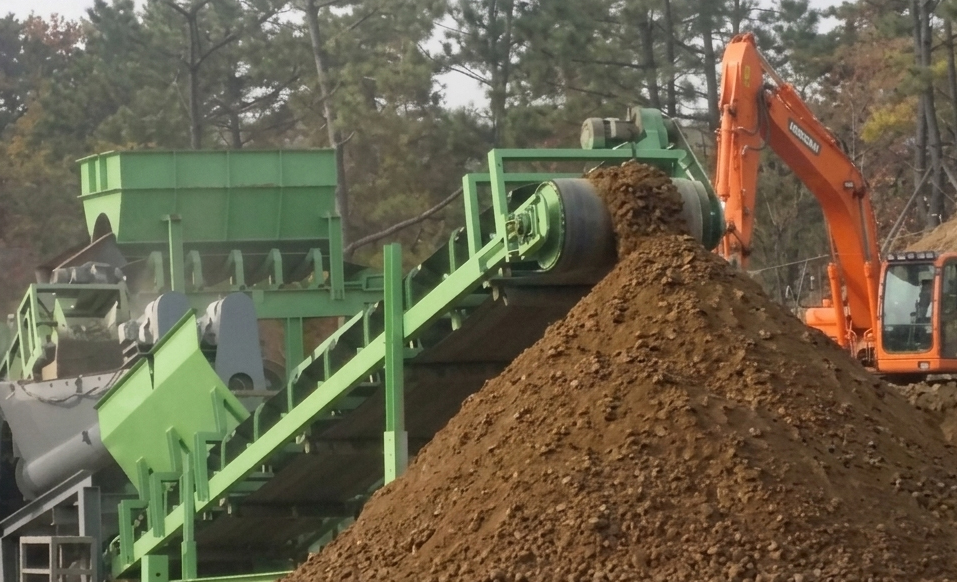
Stabilization
Immobilizes heavy metals and improves soil properties.
Stabilizing heavy-metal contaminated soil into
reusable improved soil.
Heavy-metal stabilization and soil improvement precisely blend amendments into contaminated dredged soil and dewatered sludge cake to suppress contaminant leaching and dispersion and produce soil suitable for fill, cover and planting applications.
Instead of simply hauling contaminants off site, highly contaminated fines and sludge remaining after separation are stabilized and solidified, reducing treatment volume and disposal cost while supporting circular restoration.
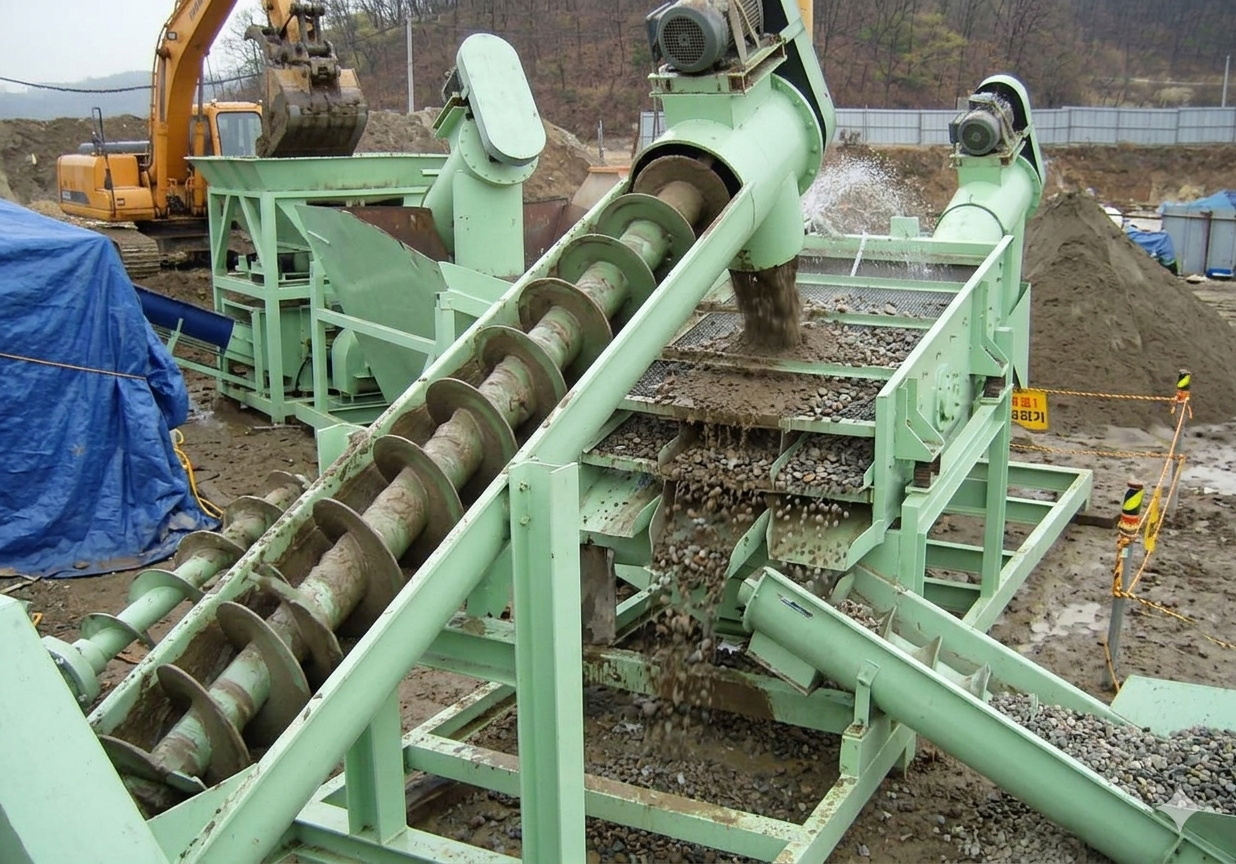
Principles of Stabilization & Soil Improvement
Hydration, pozzolanic, carbonation and needle-crystal reactions stabilize heavy metals within contaminated soil while improving physical properties and usability.
Rather than removing heavy metals, the process reduces their leaching and dispersion potential to maintain environmentally stable conditions.
Moisture, strength and compaction properties are improved to produce soil suitable for fill, cover and planting use.
Sludge otherwise requiring disposal is converted into restoration and civil-engineering material, reducing cost and environmental burden.
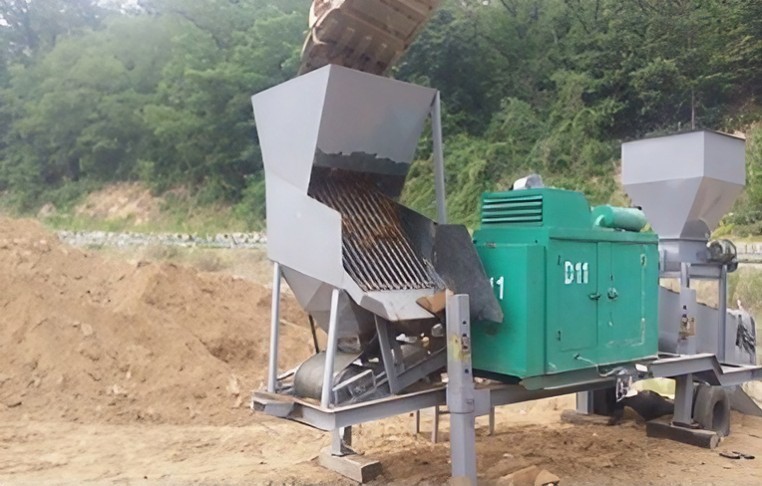
Site-Adaptable Soil Improvement Plant
The soil-improvement plant adjusts amendment dosage and mixing conditions to the moisture and contamination level of dewatered sludge cake, unsuitable soil and sewage sludge. Metered feeding and two-stage mixing produce consistent improved soil.
- Metered FeedTarget soil and amendments are fed at controlled ratios to reduce quality variation.
- High-Efficiency MixingScrew-mixer blending improves amendment reaction and solidification efficiency.
- Quality VerificationReuse suitability is verified by contamination, strength, moisture and compaction test results.
- Site FlexibilityMobile or fixed plant configurations support both constrained treatment areas and large projects.
Soil Improvement Process
Sludge cake generated after separation and dewatering is blended with controlled amounts of amendment, then reacted, cured and tested for reuse as fill, cover and other applications.
Dewatered sludge cake or unsuitable soil is delivered to the site plant.
Soil amendment is metered according to contamination and moisture levels.
Mixing promotes stabilization and solidification reactions.
Material is cured to secure reaction stability and required soil properties.
Compliance is confirmed through contamination, CBR, compaction and moisture testing.
The improved soil is reused as fill, cover, planting soil and other fit-for-purpose material.
Uses of Improved Soil
Used for floodplains, site development, landfill and embankment works.
Suitable for landfill cover, site cover and contaminant-barrier layers.
Used for wetlands, slopes, revegetation and planting bases in ecological restoration.
Applied to on-site reapplication, backfilling and roadbed reinforcement in circular construction.
High-Capacity Soil Improvement Plant
Heavy-metal stabilization and soil improvement can be more economical than disposing of all contaminated dredged soil and also support on-site circular use and restoration-material supply. Soil Resources integrates stabilization and quality control based on contamination analysis, site conditions and intended reuse.