Metal Stabilization
Stabilization treatment that limits leaching and dispersion of heavy metals.
Controlling leaching and dispersion from heavy-metal contaminated soil through
stabilization treatment.
Heavy-metal soil stabilization does not simply remove contaminants; it uniformly blends contaminated soil with stabilizers to reduce heavy-metal mobility and leachability.
Hydration, pozzolanic, carbonation and needle-crystal reactions immobilize contaminants and convert the material into stabilized soil for potential reuse as landfill or fill material, depending on site conditions.

Reduces heavy-metal mobility and the risk of secondary pollution.
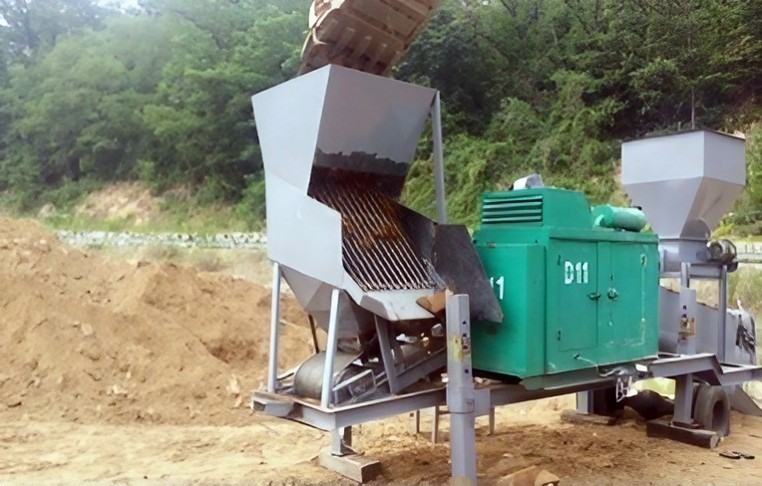
Plant-based metered feeding and uniform mixing reduce quality variation.
Evaluates reuse as fill, landfill material and other suitable applications.
Project Process
After analyzing site conditions and material characteristics, each project is carried out through staged collection, treatment, reuse and restoration.
Identify heavy metals, contamination depth and site conditions
Select amendments and stabilizers for target soil
Immobilize contaminants through plant mixing and reaction
Verify contamination, strength, moisture and reuse criteria
Technical Highlights
Soil Resources evaluates both field applicability and reuse potential to develop project strategies balancing environmental performance and economics.
- Initial solidification by hydration
- Strength gain through pozzolanic reaction
- Immobilization through carbonation
- Stabilization through needle-crystal coating formation